India Bangladesh Tensions Rock Cricket As Sport Weaponised
 Harshit - Saturday, Jan 10, 2026
Last Updated on Jan 10, 2026 08:12 PM
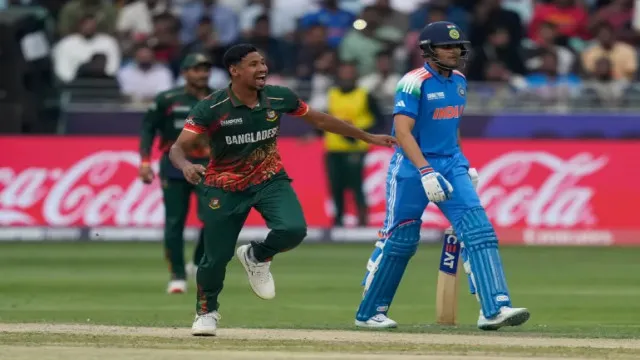
Cricket, long hailed as South Asia’s diplomatic bridge, now finds itself entangled in geopolitical tensions as India and Bangladesh confront a new crisis. The Indian Premier League (IPL) abruptly terminated the contract of Bangladesh's star pacer Mustafizur Rahman, signaling a significant shift in how sport intersects with politics. What should have been a routine franchise decision instead became a flashpoint, highlighting the rising role of cricket as a tool of political leverage rather than a neutral sporting arena.
The controversy erupted on January 3, 2026, when the Board of Control for Cricket in India (BCCI) directed Kolkata Knight Riders (KKR) to release Rahman from their squad, despite his prior signing for 9.2 million Indian rupees. Observers quickly linked the move to worsening India-Bangladesh relations following the exile of former Bangladeshi Prime Minister Sheikh Hasina to New Delhi in 2024. The decision sparked widespread debate, both in the media and among cricket fans, as it brought international attention to the growing politicization of the IPL.
In response to the IPL exit, Mustafizur Rahman promptly joined the Pakistan Super League (PSL), a move that drew sharp criticism from the Bangladesh Cricket Board (BCB). Bangladesh also banned the broadcast of the IPL nationwide, escalating the matter beyond the realm of sport. The International Cricket Council (ICC) became involved after Dhaka requested relocation of Bangladesh’s matches from India ahead of the ICC Men’s T20 World Cup 2026, highlighting the precarious balance between sports and diplomacy in South Asia.
The Mustafizur Affair: When Politics Entered the Dressing Room
Rahman’s IPL contract had been expected to mark a successful season, yet the BCCI’s directive underscored the growing influence of political developments on cricketing decisions. Analysts noted that India’s financial dominance in the sport, combined with its political influence, allows it to shape tournament structures, player access, and broadcasting rights. The Mustafizur case illustrated how a single player’s career can be directly impacted by diplomatic tensions, transforming cricket into a political instrument.
For Mustafizur, the abrupt termination meant shifting to the PSL, bypassing compensation opportunities typically afforded to injured or underperforming players. The Bangladesh Cricket Board labeled the move “discriminatory and insulting,” while Indian commentators debated the ethical implications. Senior journalist Vir Sanghvi criticized the BCCI for succumbing to communal and diplomatic pressure, warning that the precedent could damage India’s credibility in cricket and regional relations.
Cricket as a Diplomatic Weapon
Historically, cricket in South Asia has served as a vehicle for diplomacy. Iconic tours such as India’s 2004 Friendship Series in Pakistan exemplified the sport’s ability to thaw political tensions. Leaders from both nations, including Atal Bihari Vajpayee and Pervez Musharraf, leveraged cricket as a means to foster goodwill, allowing fans to cross borders and players to engage in symbolic acts of sportsmanship. Yet, recent episodes—including the Mustafizur controversy—demonstrate a reversal of that trend.
Sport analysts argue that the BCCI’s intervention in the IPL contract, even at a franchise level, signals a new era where cricket access is conditional on political alignment. Actions such as banning broadcasts and pressuring leagues reflect how deeply political considerations now penetrate the sport. Experts, including Suhasini Haidar and Darminder Joshi, contend that these decisions not only strain bilateral ties but also erode the game’s integrity and tradition of neutral competition.
Regional and Global Implications
The Mustafizur episode is part of a broader pattern where Indian cricket’s dominance intersects with political maneuvering. With 1.5 billion people and the world’s largest cricket market, India generates the majority of the sport’s revenue, giving it unprecedented leverage over scheduling, revenue-sharing, and player participation. ICC governance, led by Jay Shah, further compounds perceptions of India’s strategic influence over global cricket.
The implications extend beyond Bangladesh. Similar tensions arose during the 2025 Asia Cup, where India avoided playing matches in Pakistan, creating a hybrid tournament model. While India secured victories, the refusal to engage in customary sportsmanship rituals, such as handshakes, illustrated the broader risks of politicizing cricket. Analysts argue that turning cricket into a diplomatic weapon undermines its potential to bridge divides, making the sport a symbol of regional discord rather than unity.
From Bridge to Divider
Cricket once acted as a unifying force, fostering connections between India and its neighbors. The Mustafizur Rahman incident marks a turning point in India-Bangladesh relations within the sport. Whereas bilateral series and player participation previously transcended political disagreements, current developments reveal the fragility of that dynamic. Sport journalist Nishant Kapoor emphasized that punishing individual athletes for geopolitical issues is fundamentally unfair, and risks sowing mistrust within the cricket ecosystem.
Observers note that similar patterns could emerge elsewhere if sports governance becomes increasingly entwined with political objectives. Analysts caution that the precedent set by the IPL decision may prompt other boards to reconsider participation or hosting arrangements based on national relations, threatening the neutrality and universal appeal of cricket. As South Asia navigates these complex intersections, the role of cricket as a unifying cultural force faces unprecedented challenges, raising questions about the future of the sport in politically charged environments.
The Way Forward
Amid the controversy, stakeholders from both India and Bangladesh, including the ICC, have expressed commitments to ensuring safe and fair participation in upcoming tournaments. Yet, the Mustafizur affair underscores the urgent need for cricket governance to insulate player opportunities from political pressures. Experts suggest stronger regulatory frameworks and clear separation between political and sporting spheres to prevent future crises.
Ultimately, the episode highlights the fragile relationship between sports and diplomacy. While cricket has historically served as a soft-power tool fostering goodwill, the current crisis reveals how quickly that bridge can become a wedge. For fans, players, and administrators, the lesson is clear: cricket remains deeply intertwined with regional politics, and safeguarding the spirit of the game requires vigilance, impartiality, and respect for the athletes whose careers are impacted by forces far beyond the boundary line.
Also Read: Rishabh Pant Hit In Training Ahead Of India vs NZ ODI

नवीनतम ब्लॉग
STR vs SCO Dream11 Team, Vision11, Match Prediction, Live Streaming

IND vs NZ 1st ODI Pitch Report, Baroda Cricket Stadium stats, records
IND vs NZ 1st ODI Dream11 Team, Vision11, Match Prediction, Live Streaming

Diu Named Permanent KIBG Venue Until Next Host Is Chosen
India Stars vs New Zealand Upstarts in Series of Split Focus

Rishabh Pant Hit In Training Ahead Of India vs NZ ODI
Sanjay Manjrekar Sparks Storm Again Over Virat Kohli Comment
Neeraj Chopra Splits With Coach Jan Zelezny After WC Shock

MI-W vs DC-W Dream11 Team, Vision11, Match Prediction, Playing 11

MI-W vs DC-W 3rd WPL Match Pitch Report, Dr DY Patil Stadium stats, records